
The UAE is one of the most lucrative destinations in the Middle East for an ecommerce enterprise. The online landscape is more than 99% penetrated with internet connectivity and with increasing preference for online shopping and government support for entrepreneurship, it is time for a brand to be built online.
But before you choose a business name or even get started with your website design, you must have one question answered:
What is the startup cost for an ecommerce business in the UAE?
Not as easy as it seems. There are entrepreneurs who can make it work even with a capital investment of less than AED 10,000 and those who invest more than AED 150,000 before making their first sale.
The difference typically hinges on the sort of business you’re constructing. A dropshipping store is not budgeted the same as a fashion brand with inventory and a Shopify website is significantly more affordable to launch than a fully custom ecommerce site.
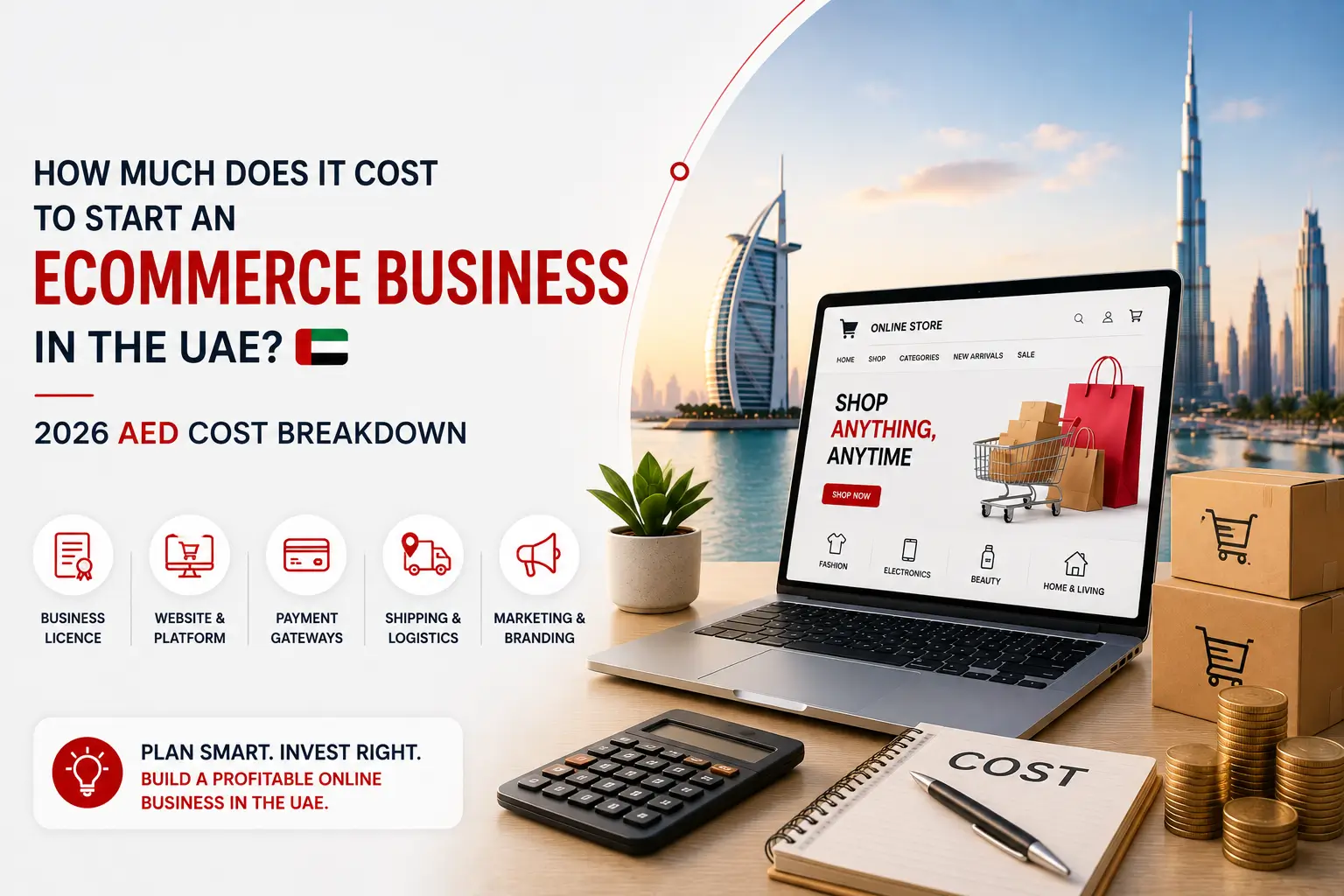
When you’re looking into the cost to start an ecommerce business in the UAE, this guide will help you understand all the key costs you’ll have to consider in 2026.
If you’re still planning your launch, you may also find our guide on how to start an ecommerce business in the UAE helpful before calculating your budget.
From trade licences to website building, from payment gateways to marketing, from shipping to hidden fees, we’ll be able to tell you where all that money’s going and how to budget accordingly.
Before you start, what is the actual cost of an ecommerce business in the UAE?
Unfortunately, there is no fixed cost as each ecommerce business has its own needs. But, the majority of startups fall in one of 4 investment ranges.
| Business Type | Estimated Startup Cost |
| Home-Based or Dropshipping Store | AED 8,000–20,000 |
| Shopify Store with Small Inventory | AED 20,000–45,000 |
| Growing Ecommerce Brand | AED 45,000–80,000 |
| Custom Ecommerce Platform | AED 80,000–250,000+ |
These estimates typically include:
- Trade licence
- Website setup
- Domain name
- Hosting
- Branding
- Initial inventory (if applicable)
- Payment gateway integration
- Marketing budget
- Shipping setup
- Business tools
It varies by your objectives, business plan and speed of growth.
Every Cost You’ll Need to Budget For (and What You Can Skip)
The initial error first-time entrepreneurs make is assuming that just obtaining an ecommerce licence represents the biggest expense. But in fact, your licence is only a component of your startup budget.
You’ll also need to put money into your website, payment systems, branding, customer acquisition and day-to-day business to launch a professional online store.
Some of these costs for your business are necessary from the outset, and others will be added when you begin to expand.
Let’s break down each of these costs.
Your Trade Licence Is Just the Beginning
A valid ecommerce trade licence is the foundation of your online business. Without it, you won’t be able to legally operate, open a corporate bank account, or partner with many payment gateways and logistics providers.
The total cost depends on where you register your company.
| Licence Type | Estimated Cost (AED) |
| Free Zone Ecommerce Licence | 5,500–15,000 |
| Mainland Ecommerce Licence | 12,000–25,000 |
| Premium Business Setup Packages | 20,000–35,000 |
Many new business owners choose a Free Zone licence because it offers lower startup costs, a simpler registration process, and attractive business packages for startups. Mainland licences, on the other hand, may be more suitable if your business requires greater flexibility or operates extensively within the UAE market.
When comparing licence packages, don’t just look at the advertised price. Some providers include services such as trade name reservation, initial approvals, visa eligibility, and business support, while others charge separately for each service.
Why Your Ecommerce Platform Can Save, or Cost, You Thousands
The platform you choose will have a significant impact on your overall ecommerce startup cost in the UAE.
Today, most entrepreneurs choose between three options:
- Shopify
- WooCommerce
- Custom Ecommerce Development
Shopify
There are many eCommerce platforms that startups can use, but one of the most popular and
An easy-to-use platform is Shopify.The startup will have several ecommerce platforms to choose from, with Shopify being one of the most widely used and user-friendly platforms.
Typical costs include:
- Basic Plan: Around AED 150/month
- Grow Plan: Around AED 400/month
- Advanced Plan: Around AED 1,500/month
Shopify saves businesses a number of extra costs associated with hosting, security, and software updating.
A great choice for business owners who wish to get their company up and running fast and do not have to deal with the technical difficulties of website maintenance.
WooCommerce
WooCommerce is free to install, but there are a few other costs to consider if you’re looking to install WooCommerce into a professional store.
There are still costs associated with:
- Web hosting
- Premium plugins
- Security
- Website maintenance
- Backups
- Performance optimization
The price for the first year is between AED 2,000 and AED 8,000 depending on the features required for most businesses.
Custom Ecommerce Website
Sometimes an ecommerce website is custom built for businesses that have complex needs.
This is the most flexible, functional and gives the most control of the user experience, but also involves a higher initial outlay.
Common costs of development are:
| Website Type | Estimated Cost (AED) |
| Basic Custom Store | 20,000–35,000 |
| Mid-Level Ecommerce Website | 35,000–70,000 |
| Enterprise Ecommerce Platform | 80,000–250,000+ |
Shopify is typically the best return on investment for startups that have limited budgets.
The True Price of Creating Your eCommerce Site
Your website is not simply an online catalogue, it is your electronic store front and one of the most important aspects of gaining the trust of your customer.
Although DIY website builders appear viable for the price, the expenses of professional development can mean better conversion rates, quicker loading times, improved SEO results, and a more pleasant shopping experience.
Below are the common website design fees in UAE:
| Website Design Option | Estimated Cost (AED) |
| DIY Theme | Free–500 |
| Premium Theme | 250–1,200 |
| Professional Website Design | 5,000–20,000 |
| Custom UI/UX Design | 20,000–50,000 |
Some themes are expensive, so if you have limited funds, you might want to begin with a premium Shopify or WooCommerce theme. The more your business expands the more you can get a full customised design that matches your brand and your customer’s journey.
Try not to forget these site fundamentals: Hosting, Domain & SSL.
Some small technical components of an ecommerce website that are vital to the smooth functioning of it are overlooked by many entrepreneurs. Each expense might appear insignificant, but they can add up over time and should be part of your startup budget.
Domain Name
With a professional domain name, customers can easily find and remember your business.
The typical costs (annually):
.com: AED 50–120
.ae: AED 120–250
If possible, use a short, easy-to-spell domain name that is similar to your brand.
Website Hosting
For those running WooCommerce or a custom-built website, hosting will incur an extra expense.
| Hosting Type | Annual Cost (AED) |
| Shared Hosting | 250–900 |
| Managed WordPress Hosting | 600–2,000 |
| VPS Hosting | 2,000–6,000 |
| Cloud Hosting | 4,000–15,000 |
Shopify users can avoid buying extra hosting as it is a part of their monthly subscription
SSL Certificate
An SSL certificate provides encryption for customers’ information and protects online transactions.
Many hosting companies offer a free SSL certificate, while higher security and validation levels might have a higher price tag of between AED 200 and AED 1,500 per year.
Inventory Costs: Your Biggest Startup Expense (Or Maybe Not)
For many ecommerce businesses, inventory is the single largest startup expense. However, thanks to modern fulfillment models, you don’t necessarily need to spend thousands of dirhams stocking products before launching.
The amount you’ll invest depends on your business model.
| Business Model | Estimated Initial Cost (AED) |
| Dropshipping | 0–1,000 |
| Print-on-Demand | 0–2,000 |
| Small Inventory Store | 5,000–20,000 |
| Medium Retail Business | 20,000–80,000 |
| Established Brand Launch | 80,000–250,000+ |
If you have a small budget, dropshipping or print-on-demand will be a great option, as it lets you test the products without buying them in bulk. Your supplier completes the orders as they are received by the customer, thus lowering the risk of financial loss.
Keeping inventories is an option that a business can choose for having complete control over branding, packaging, and delivery dates. This will need a higher initial investment, but it can help to enhance the customer experience and boost profits down the road.
When ordering in bulk, validate the demand first! You can minimise risk and reduce the likelihood of cash tying up in slow moving stock by introducing a limited range of products.
Building Trusts without Blowing Your Budget
A customer’s decision to trust an online business or not can happen in just a few seconds after arriving at the store’s homepage. The difference between a visitor bouncing off the website and making a purchase may be the professional brand identity.
Being a brand is not all about a logo. Consider investing in:
- A memorable logo
- Brand colours and typography
- Product packaging
- Social media templates
- Email signatures
- Brand guidelines
Here’s what you can expect to pay:
| Branding Service | Estimated Cost (AED) |
| DIY Design Tools | Free–300 |
| Freelance Designer | 500–2,500 |
| Professional Branding Agency | 3,000–12,000+ |
When budget is a concern, begin with the basics: a professionally-created logo and a unified visual identity. As your business expands, you can incorporate custom packaging, high-quality photography and brand guidelines.
Payment Gateway Fees That Take Profit Away.
In e-commerce, payment gateways are a necessary part of online transactions, but there are costs associated with them.
The majority of providers will charge a mixture of:
- The initial cost of a setup, if required (one-time fees)
- Monthly service charges
- Transaction fees on every sale
Here’s a general breakdown:
| Payment Gateway Cost | Estimated Amount |
| Setup Fee | Free–AED 1,500 |
| Monthly Fee | Free–AED 300 |
| Transaction Fee | 2%–3% + fixed fee per transaction |
While transaction fees may seem small, they can significantly affect your profit margins as sales increase. There are a number of things to keep in mind when selecting a payment gateway, not just the costs but customer support, settlement time, security measures, and ecommerce platform compatibility.
Shipping & Fulfilment Costs Most New Sellers Underestimate
When starting out many business owners tend to concentrate on building their website and only budget for shipping when they receive the first order. If not integrated into your pricing structure, though, fulfilment costs can quickly become a burden on profitability.
Typical shipping-related expenses include:
- Courier service fees
- Packaging materials
- Shipping labels
- Return shipping
- Warehouse storage (if applicable)
Estimated startup budget:
AED 500–5,000
For businesses looking to expand their reach and grow within the UAE, working with trusted logistics vendors can enhance delivery times and customer satisfaction. With greater orders, you may also have the ability to negotiate reduced shipping rates, which will cut your long-term operating expenses.
The Marketing Budget You Need to Get Your First Customers
Without customers knowing about your great ecommerce platform, you will not be selling products and services. Marketing is not a fat budget item – it’s an essential investment to attract traffic, grow brand visibility, and turn prospects into customers.
Your marketing budget can include:
- Search Engine Optimization (SEO)
- Google Ads
- Meta (Facebook & Instagram) Ads
- Email marketing
- Influencer collaborations
- Content marketing
Investing in the right strategy from the beginning can significantly reduce customer acquisition costs over time. If you need expert support, consider working with an ecommerce marketing agency in Dubai to build a sustainable growth plan.
Here’s a realistic monthly budget:
| Marketing Channel | Estimated Monthly Cost (AED) |
| SEO | 2,000–8,000 |
| Google Ads | 2,000–15,000 |
| Meta Ads | 2,000–20,000 |
| Email Marketing | 100–800 |
| Influencer Marketing | 1,000–25,000+ |
If you’re just about to start your business, you should be prepared to spend 20 to 30 % of your business budget on marketing.
Though the traffic from paid ads can be immediate, the investment in SEO can drive long-term visibility and will also help to lower customer acquisition expenses over time.
A well-planned ecommerce SEO strategy helps your online store rank for high-intent keywords and generate consistent organic sales over time.
The Business Tools that Ensure Your Store Runs Smoothly.
As your ecommerce business grows, you’ll find yourself using a number of software tools for automation, customer service, and operations management to improve efficiency.
Common tools include:
- Inventory management software
- Accounting software
- Customer Relationship Management (CRM)
- Email marketing platforms
- Live chat software
- Analytics and reporting tools
Estimated monthly software budget:
AED 200–2,500
Although these tools represent an ongoing expense, they can save hours of manual work and help you scale your business more efficiently.
If you’re planning your long-term growth strategy, our ecommerce marketing guide for the UAE covers SEO, paid advertising, content marketing, email campaigns, and conversion optimization in more detail.
Shopify vs WooCommerce vs Custom Website: Which One Gives You the Best ROI?
Choosing the right ecommerce platform isn’t just about features, it’s about finding the best balance between cost, flexibility, and long-term growth.
Here’s how the three most popular options compare:
| Feature | Shopify | WooCommerce | Custom Website |
| Upfront Cost | Low | Low–Medium | High |
| Monthly Costs | Medium | Medium | Medium–High |
| Hosting Included | ✔ | ✘ | ✘ |
| Technical Skills Required | Low | Medium | High |
| Scalability | Excellent | Excellent | Excellent |
| Design Flexibility | High | High | Unlimited |
| Setup Time | A Few Days | 1–3 Weeks | Several Weeks or Months |
| Best For | Startups & SMEs | Growing Businesses | Large Enterprises |
Which Platform is best for Ecommerce Business?
Shopify is the option to choose, if you’re looking to get up and running without much technical expertise and with a predictable monthly fee,.
Opt for WooCommerce, if you wish to have more flexibility, own your website and are comfortable to handle the website hosting and plugins.
Go with a custom ecommerce website, if your business needs special features, custom integrations, or a specific user experience that the standard ecommerce platforms are unable to offer, then you’ll want to
Your decision will be based on your business objectives, budget and growth plans.
The Hidden Costs of Ecommerce Most First-Time Business Owners Miss.
Many people only consider essentials such as website development and licences when they are calculating the cost of starting an ecommerce business in the UAE. Unfortunately, it is often the smaller costs that gradually add up later on in the budget.
There are a number of additional costs which are often overlooked:
- Website maintenance and updates
- Premium plugins and app subscriptions
- Product photography
- Content writing and blog creation
- Business insurance
- Trademark registration
- Accounting and bookkeeping services
- Product returns and exchanges
- Packaging supplies
- Customer support software
- Email hosting
- Cybersecurity tools
- Backup and recovery services
None of these costs are really on their own, but can cost you thousands of dirhams of running costs per year.
Proper budgeting, and having a contingency fund, can help prevent you from getting into a financial bind in your first year.
Three Realistic Ecommerce Startup Budgets (AED 10K, AED 40K & AED 100K+)
Uptil, now you would have a good understanding of the cost required for your online store. But how do these expenses come together in a real-world budget?
Here are three common scenarios of starting up your business that you can use to gauge how much you may require, depending on your business objectives.
Budget 1: Starter Ecommerce Store (Around AED 10,000)
This is great for anyone who wants to dip their toes first into the market but doesn’t want to make a huge investment right off the bat.
Some of the typical budget provisions will be:
| Expense | Estimated Cost (AED) |
| Free Zone Ecommerce Licence | 6,000 |
| Shopify Basic Plan | 600 (Annual Estimate) |
| Domain Name | 100 |
| Premium Theme | 800 |
| Logo & Basic Branding | 800 |
| Initial Marketing | 1,500 |
| Miscellaneous Costs | 200 |
| Estimated Total | AED 10,000 |
It’s ideal for dropshipping, digital products or print-on-demand operations where inventory is not a significant factor.
Budget 2: Growing Ecommerce Brand (Around AED 40,000)
If you’re planning to build a long-term ecommerce business with branded products and a stronger online presence, you’ll likely need a larger investment.
A typical budget may include:
| Expense | Estimated Cost (AED) |
| Trade Licence | 10,000 |
| Shopify or WooCommerce Website | 8,000 |
| Product Inventory | 10,000 |
| Branding & Product Photography | 4,000 |
| Marketing Campaigns | 6,000 |
| Shipping Setup & Business Tools | 2,000 |
| Estimated Total | AED 40,000 |
This budget gives you room to create a more polished customer experience while investing in customer acquisition from day one.
Budget 3: Premium Ecommerce Brand (AED 100,000+)
Businesses or entrepreneurs with existing operations who are looking to launch their business heavily are more inclined to invest in a customized ecommerce ecosystem.
This budget generally consists of:
- An actual licence for the Mainland or the Free Zone
- Custom ecommerce website
- Professional UI/UX design
- Large inventory
- Warehouse setup
- The advanced CRM and automation tools
- Professional photography and video production
- Continuous search engine marketing and advertising
Estimated investment:
AED 100,000–250,000+
While the initial investment may be substantial, this will offer a scalable foundation that will help propel businesses in highly competitive industries.
Ecommerce Startups Can Save Money Without Sacrificing Quality in these Seven Smart Ways.
It is not necessary to sacrifice quality when you’re starting lean. In fact, many successful ecommerce brands got started with small budgets and slowly got started.
Here are seven tips that can help lower costs for your startup:
1. Choose Shopify over a custom website
A custom-built ecommerce website is flexible, but it will cost more. Shopify enables you to launch quickly, supported with hosting, safety, and updates.
2. Start with a smaller product range.
Avoid carrying a large number of products – select just a few that have good sales potential. This minimizes inventory costs and allows you to know what your customers are looking for.
3. Think Dropshipping & Print on Demand
These business models remove the need to invest in inventory initially, thus minimizing financial risks if cash flow is limited.
4. Join the e-commerce revolution.
While paid ads can boost your traffic right away, SEO can help your website rank higher for organic visitors over time. A balanced approach will frequently be most cost effective.
5. Use Cloud-Based Business Tools
Some cost-effective software has great features but it does not need to be a big investment. Always remember, they can be upgraded when the business expands.
6. Outsource Specialist Tasks
In the initial phase, it can be more affordable to hire freelance web designers, branders, or content creators than to have a dedicated team on board.
7. Be Prepared for hidden costs.
A contingency fund for unforeseen expenses, such as plugin renewals, shipping adjustments and website maintenance, can help prevent cash flow problems later on.
How Much Does It Cost to Start an Ecommerce business in the UAE?
As you might imagine, quite a complex question.
The reality is that there’s no standard price as each e-commerce business is unique. The total investment will vary according to your business plan, platform, inventory, marketing and future development.
For most startups, however, this is a good guess:
- For a lean ecommerce business, or dropshipping store, it is available for AED 8,000 to 20,000.
- AED 20,000-50,000 for professionally branded Shopify or WooCommerce ecommerce store with marketing and inventory.
- Custom ecommerce solution with high-level features and high volume operations, AED 80,000 – 250,000+
Look for ways to invest, not to keep costs down. All of these, and more, can make a significant difference in your success, more than something as simple as just picking the lowest price.
Ahead of that, having a clear idea of your start-up expenses and making the best use of your budget will put you in a position to launch, expand and thrive in the UAE’s fast-growing e-commerce sector.
Ready to Launch? Request a Custom Ecommerce Website Quote today.
For anyone launching a new ecommerce venture or growing an already established business, selecting the right ecommerce system can help save time, alleviate unessential costs, and enable sustainable growth.
We can assist you with your ecommerce development needs by:
- Pick the appropriate platform for your business.
- Create a fast, secure and mobile-ready e-store.
- Utilize trusted payment methods and shipping options.
- Build an ecommerce site that meets your needs and budget, and can grow.
Contact us today to get a quote for ecommerce development and a free consultation. Let’s create an online store that you can grow with your business.
Frequently Asked Questions (FAQs)
Which is the most expensive part of building an eCommerce store?
The top four costliest items for most businesses are website, inventory, digital marketing and the trade licence. The proportions will vary depending on your business and the products you wish to sell.
Can you build an ecommerce website from scratch for cheaper than Shopify?
Yes. Shopify has lower initial costs as it includes all of the ecommerce features, software updates, security, and hosting in a monthly subscription. A custom website will have more flexibility and is going to call for a significantly greater capital investment.
What is the minimum investment required for starting an online business in Dubai?
Absolutely. A typical start-up may include a Free Zone ecommerce licence, Shopify and a niche product line. A dropshipping or print-on-demand business can also help lower the initial cost of the enterprise by not requiring the initial investment in inventory.
What is the budget for ecommerce marketing?
The lowest agreed to is AED 2,000 to AED 10,000 per month, dependent upon your goals and competition. When you use SEO and paid ads together, you can appeal to both visitors and customers that come to your site right away, as well as for long-term growth.
What are some other expenses I need to budget for?
Other often-forgotten costs are website maintenance, premium plugins, payment gateway transaction fees, packaging materials, returns management, accounting services, software subscriptions and cyber security tools. How you prepare for these expenses can help you prevent any unexpected scenarios as your business expands.
