
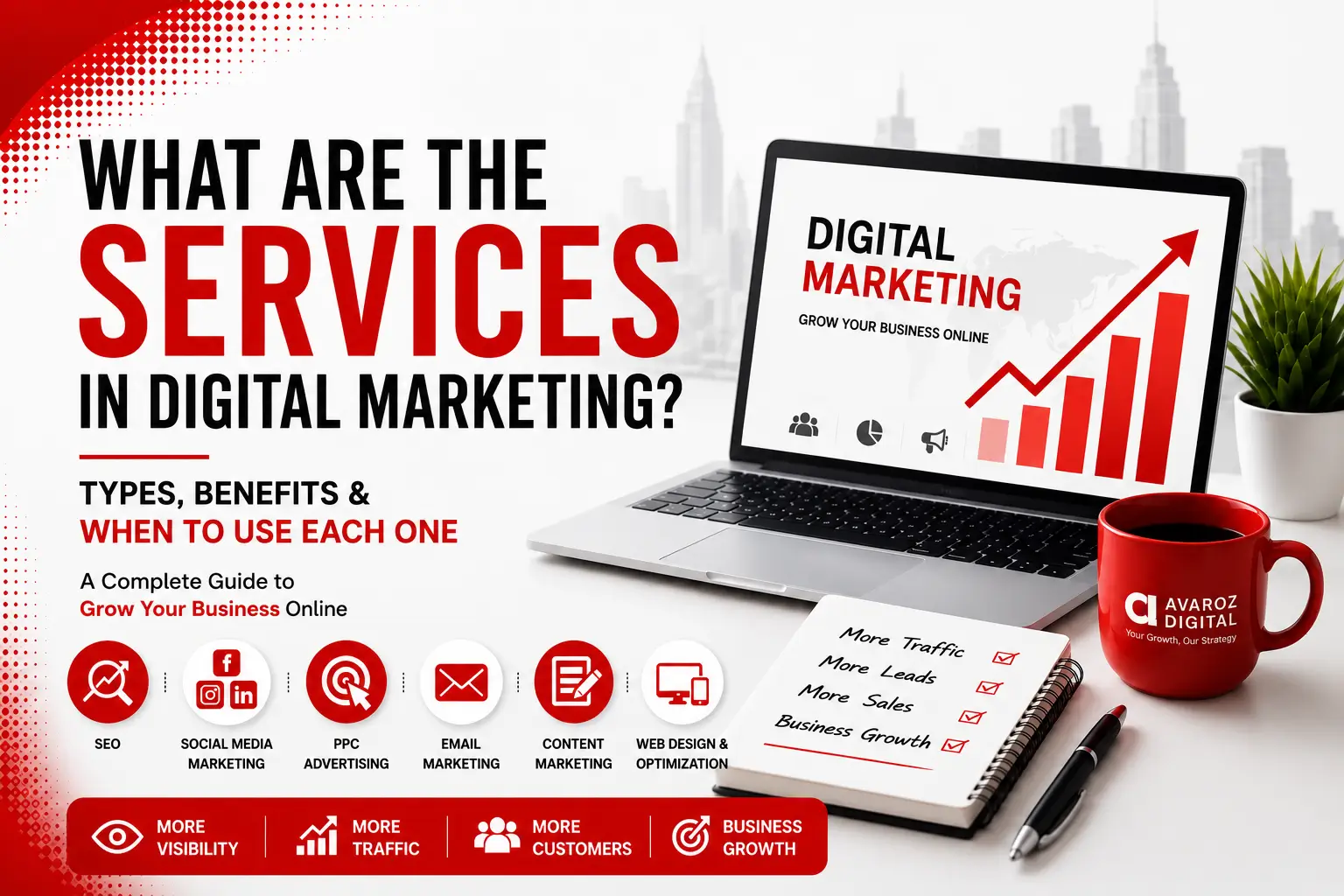
The way of doing digital marketing has changed a lot these days, gone are the days when print ads, billboards and tv commercials were the sole avenues for brand awareness, regardless of the size.
Nowadays the internet has created a huge bubble of opportunities where targeted audiences can be reached for business expansion and awareness.
Digital marketing now is done through various channels and means. And with too many tools and channels available can be overwhelming for many.
Whether you’re a startup or an established company looking for further expansion. This guide will be really helpful for you in terms of explaining all the major digital marketing channels, their benefits and how to invest for better results.
What Is Digital Marketing?
Digital marketing services help businesses promote products, services or brands can be marketed via the use of search engines, emails, social media channels and mobile applications.
Unlike traditional marketing, digital marketing is done based on data and facts which allows the companies to monitor its efficacy and potency in real time. Then companies can actually aim at improving specific campaigns to boost their visibility and hence sales.
Digital marketing is not just a single service, instead it is a combination of different services that help companies reach out its customers, engage them and convert them into actual leads.
1. Search Engine Optimization (SEO)
What It Is
SEO is a method used to optimize websites and content to rank it higher in organic SERPs on platforms like google and bing. It covers on-page optimization (Keywords, metadata, content), technical SEO (site speed, crawlability, structured data) and off-page SEO (backlinks and authority building).
Key Benefits
- Delivers consistent, long term organic traffic without continuous ad spend.
- It builds brand trust and credibility, customers trust results more than ads.
- Higher ROI over time compared to paid channels
- Captures high-intent users actively searching for your product or service
When to Use It
SEO is a long-term investment. It’s best for businesses that have a website and want sustainable growth over 6 12+ months. It is quite effective for service businesses, e-commerce stores, blogs, and SaaS companies.
Working with an SEO agency can help you build a long-term strategy and achieve sustainable organic growth. If you are starting a new business website then SEO should be your foremost priority, the sooner you build authority the faster you will see results.
2. Pay-Per-Click Advertising (PPC)
What It Is
Paid advertising, or PPC, is an advertising system in which businesses pay to bid on keywords, and for every click they receive, they pay one. Google Ads makes up the largest share of the PPC platform, and there are other options like Bing Ads or Amazon Ads. PPC comprises search ads, display ads, shopping ads and remarketing campaigns.
Key Benefits
- Immediate visibility and traffic, results begin the day after the campaign is launched
- Very targeted: target users with keywords, location, device, time of day and more.
- Fully measurable ROI, you know exactly what each click and conversion costs
- Adaptable: up the budget as it is doing well, down the budget as it is not doing well
When to Use It
The PPC method is ideal for you if you need quick results, for your new product launches, seasonal promotions or if you want to win in competitive markets and you can’t wait for SEO action.
It is also very effective for businesses that have margins that are strong, the economics of cost per click must be sound. When PPC and SEO are used together they give better results. Paid ads bring the visitors and start the organic rankings in motion for long term growth.
3. Social Media Marketing (SMM)
What It Is
Social media marketing is the process of creating and sharing content, posts, videos, stories, reels, and ads on social media platforms such as Facebook, Instagram, LinkedIn, TikTok, X (Twitter), Pinterest, Snapcaht and YouTube to promote brand awareness, engage audiences, drive traffic or conversions.
Key Benefits
- A broad reach: billions of users are regularly using social platforms
- Great for inbound marketing and community building.
- Allows for two-way communication between brands and customers
- Enhanced targeting capabilities with paid social ads.
- Supports viral growth and word of mouth amplification
When to Use It
Social media is of use to almost every business, but it depends a great deal on the platform you choose. Instagram and TikTok are the platforms for B2C focused on visual products such as fashion, food and lifestyle. B2B companies enjoy a more successful presence on LinkedIn. Facebook is a great help to local businesses. Know where your target market is, and follow them there instead of being everywhere.
4. Content Marketing
What It Is
Content marketing means producing and sharing useful, relevant, and consistent information, blog posts, articles, videos, infographics, podcasts, whitepapers, case studies, and other content that attracts a well-defined audience and ultimately leads to a profitable customer action.
Key Benefits
- Establishes brand authority and thought leadership within the industry you are in.
- High quality content gets backlinks and ranks in the search engines.
- Nurtures prospects throughout the buying process with educational content
- Provides long term benefits: A good article will keep generating traffic for years to come
- Backs all other digital marketing channels
When to Use It
Businesses that rely on expertise, SaaS, financial services, healthcare, law firms, agencies and e-commerce brands with complex products should do content marketing. It is best used as a long-term and ongoing campaign. Content marketing is one of the most effective ways to get right to communicating your value proposition and differentiating yourself from your competitors, when you’re having a hard time.
5. Email Marketing
What It Is
Email marketing entails delivering specific messages, newsletters, promotions, product news, welcome series, cart abandonment emails, and automated sequences straight to subscribers’ Inbox. Most email marketing is done on platforms such as Mailchimp, Klaviyo, HubSpot, and ActiveCampaign.
Key Benefits
- One of the highest ROI digital marketing channels ($36–$42 ROI per $1 spent)
- One-to-one channel without algorithm interference.
- Highly segmentable, send different messages to different audience segments
- Perfect for lead nurturing and customer retention
- The ability to communicate individually, to a huge number.Personalized communication at scale, thanks to automation.
When to Use It
For any business that already has customers or a list of subscribers, email marketing is the key to success. It is great for customer retention and re-engagement, upselling and cross-selling. Welcome emails, abandoned cart emails, and post-purchase emails are automated sequences that are responsible for a ton of money for ecommerce brands. You’re leaving money on the table if you’re not gathering emails and providing them with marketing.
6. Influencer Marketing
What It Is
Instagram influencer marketing is simply a method of reaching consumers through someone who has already gained a following on Instagram, YouTube, TikTok or blogs. Influencers vary in size from a few million to a few thousand to some who have niche audiences with strong engagement.
Key Benefits
- Audiences trust recommendations from the influencer
- A wider range of access to niche built communities relevant to the product
- Generates brand and direct sales
- More cost-effective than usual celebrity endorsement often
- Produces material which can be reused on your own platforms
When to Use It
Beauty, fashion, food, fitness, gaming and lifestyle are some of the most effective categories for influencer marketing for consumer brands. When it comes to niche products micro-influencers can achieve greater engagement and conversion rates than mega-influencers. It works best when there is actually overlap between the influencer’s followers and your target audience: bogus partnerships are obvious and seldom effective.
7. Affiliate Marketing
What It Is
Affiliate marketing is a performance-driven methodology that involves businesses rewarding a third party (affiliate) for their contributions to sales, leads, or clicks. Your affiliates use unique tracking links to sell your product via their website, blog, email lists, or social media.
Key Benefits
- Do not pay for advertising without results, it’s a waste of money
- Reaches out via a network of partners
- Low risk for brands – affiliates take care of the promotion costs
- Affiliate Friendly: More affiliates = more reach
- Excellent for online sales, Software as a Service and financial services
When to Use It
It is the most effective strategy for companies that have existing products and solid profit margins, and are willing to pay commissions. It’s a great passive revenue generating stream for blogs/publishers and an affordable acquisition stream for brands. Create an affiliate program when you’ve established a product-market fit and you need to scale your acquisition as you scale your product but not your ad spend.
8. Video Marketing
What It Is
Video marketing is defined as the production and distribution of video content, explainer videos, product demos, testimonials, tutorials, live streams, short form reels and branded storytelling across video platforms such as YouTube, TikTok, Instagram, Facebook and your own website.
Key Benefits
Online video is the most watched content format.
- Improves engagement, time-on-page, and conversions by a huge margin
- Develops brand personality and emotional connection
- Video SEO is useful and YouTube is the second largest search engine in the world.
- The potential organic reach of short-form video (Reels, TikTok) is huge!
When to Use It
Video marketing works best for products that require demonstration and education, brands looking to make themselves more human, and companies that are focused on the younger generation.
Product videos on landing pages can lead to substantial conversion increases for e-commerce brands. If you have the budget for even the most basic type of video production, this channel is always a big return on engagement.
9. Conversion Rate Optimization (CRO)
What It Is
CRO is the systematic process whereby a percentage of website visitors can be increased to the point at which they do a desired action, for example make a purchase, fill out a type, sign up for a newsletter. This involves user behavior analytics and heat maps, landing page optimization, and UX enhancements, among other practices.
Key Benefits
- Increases the value of existing traffic without adding more ads to spend money on
- Every change is tested, not guessed, and is data-driven
- Immediately affects conversion rates and revenue
- Small improvements add up over time: compounds over time
- Communicates marketing and product information to a wider audience
When to Use It
It is best implemented when you have some meaningful traffic and helps to boost the performance of all other channels. If you are investing in ads and/or SEO but your website is not converting, you should prioritize CRO before increasing your investment. It is especially important for high-conversion landing pages like eCommerce pages, SaaS sign-up pages and lead generation pages.
10. Online Reputation Management (ORM)
What It Is
ORM is about tracking, controlling and enhancing your brand’s visibility online, on review sites (Google, Facebook, Yelp, Trustpilot), on the news and in search engines.
Key Benefits
- Increases consumer trust – 93% of buyers read reviews before buying
- Maintains brand integrity and minimizes damage to the brand’s reputation
- Optimizes the local SEO with signals from reviews
- Converts happy customers into brand promoters.
- A crucial part of crisis management and damage control operations.
When to Use It
ORM is a crucial element for any business that deals with the public, but it’s particularly significant for local businesses (restaurants, clinics, law firms), e-commerce businesses, and businesses facing a high level of scrutiny (finance, healthcare). Reactive ORM is a lot more costly and challenging than proactive reputation building, build it before it occurs.
11. Mobile Marketing
What It Is
Mobile marketing also encompasses strategies designed for mobile users such as SMS / MMS messaging, in-app advertising, push notifications, mobile optimized sites, and QR codes (Quick Response Codes). 60% of traffic to sites is now via mobile devices and that’s no longer something that most businesses can ignore.
Key Benefits
- Contacts customers in the place where they’re most active
- SMS is more than 90% open, and that is much better than the rate for email!
- Hyper-relevant messaging is achieved with location based targeting.
- The in-app ads can be served to the audiences in a very engaged environment.
- Ensures smooth customer journeys across channels
When to Use It
For retail, hospitality and event based businesses that need location targeting, mobile marketing is a must have. This is why SMS marketing is beneficial for flash sales, appointment reminders and loyalty programs. Any company whose customers interact with them mainly through a smartphone should make sure that all points of interaction are mobile first.
Conclusion
There is no one-size-fits-all approach to digital marketing. It’s a world of services that each have their own positive attributes, timeframes, and best use cases. The thriving companies aren’t chasing all the channels, but only those that fit their objectives, audience, and resources.
From a basic SEO campaign to an email automation sequence to an extensive multi-channel effort, the important thing is to measure, tweak and learn continuously. While the digital world is changing constantly, the basic tenets of taking the right message to the right person at the right time have stayed the same.
Use one or two channels at a time, practice them and use the data to make your next decision.
Frequently Asked Questions (FAQs)
What is the most effective digital marketing service?
There’s no single “best” service, it depends on your goals, audience, and budget. However, SEO and email marketing consistently deliver the highest long-term ROI for most businesses, while PPC provides the fastest short-term results.
How much does digital marketing cost?
Costs vary widely. SEO services typically range from $500–$5,000+/month. PPC budgets can start at $500/month but scale into tens of thousands. Social media management ranges from $300 to $5,000+/month depending on scope. Many small businesses start with one or two channels and expand as a result
Can small businesses benefit from digital marketing?
Absolutely. Digital marketing is one of the great equalizers, a small business with a smart SEO strategy or engaged social presence can compete with far larger competitors. Start with the channels most relevant to your audience and scale from there.
How long does it take to see results from digital marketing?
PPC and paid social can generate results within days. SEO typically takes 3–6 months to show meaningful organic growth. Email marketing shows results after the first campaign, but list-building takes time. Content marketing compounds over 6–12+ months.
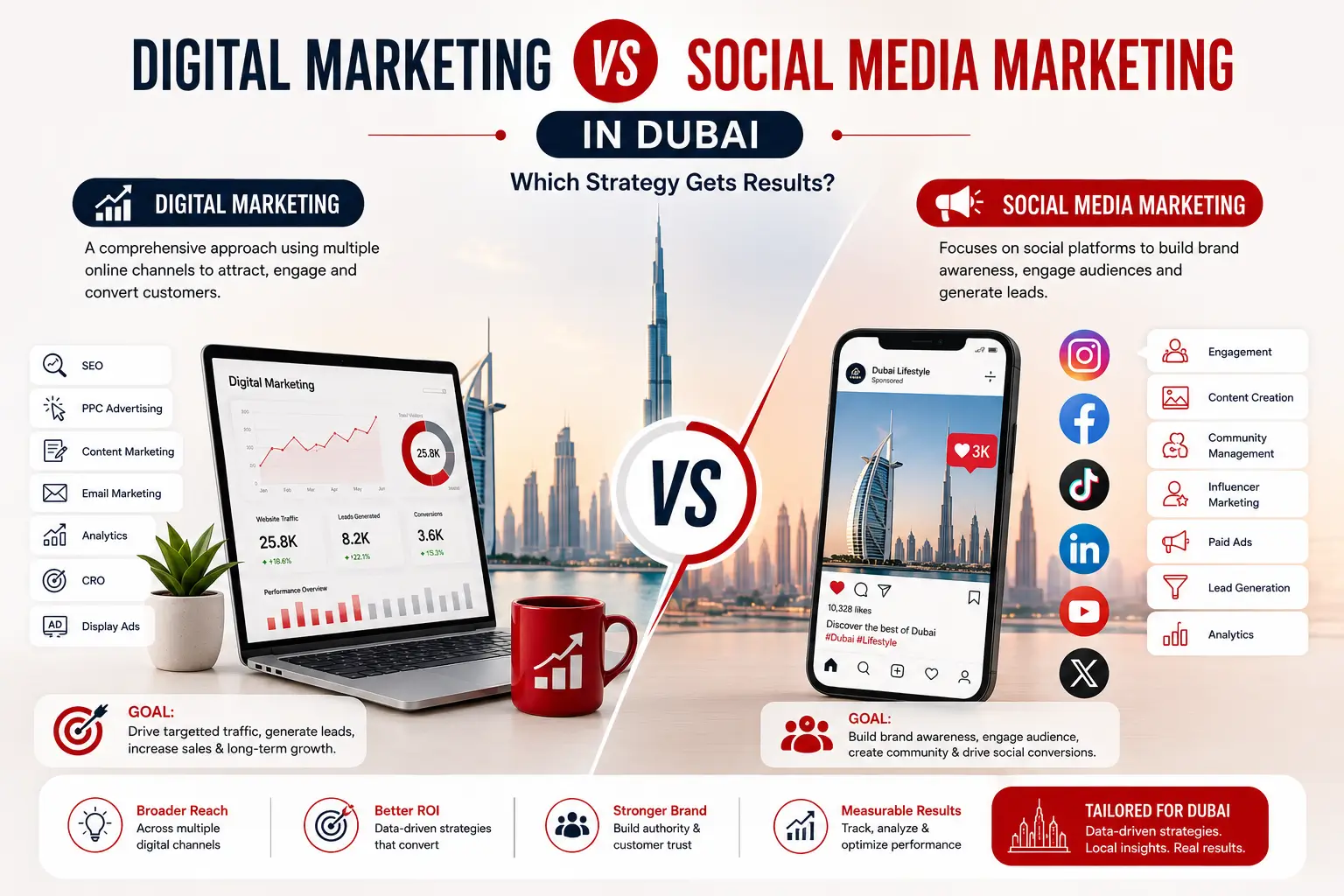
What’s the difference between digital marketing and social media marketing?
Social media marketing is one component of digital marketing. Digital marketing is the broader umbrella encompassing all online channels, search, email, paid ads, content, and more. Social media is one channel within that ecosystem.
